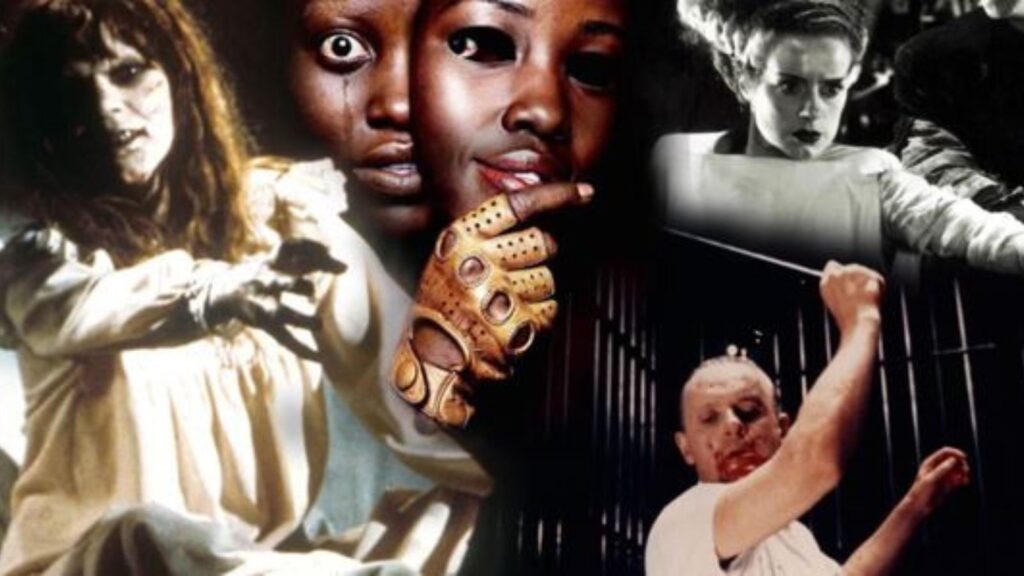
Every era gets the horror it deserves. This is not an observation about quality — it is an observation about content. The monsters a culture generates, the fears it externalises into narrative, the threats it imagines stalking through darkened corridors and suburban streets, are among the most reliable indicators of that culture’s anxieties, preoccupations, and unresolved tensions.
The 1950s produced alien invasion films that were transparently about Communist infiltration. The 1970s produced body horror and slasher films that reflected the decade’s sexual anxiety and disillusionment with authority. The 1980s gave us the AIDS-era fear of bodily contamination. The 2010s and 2020s have given us social horror — Get Out, Hereditary, Midsommar, The Witch — films that locate terror not in external monsters but in families, communities, and systems that betray the people inside them.
Modern anxiety is also increasingly technological. We live inside ecosystems designed to capture attention, monitor behaviour, and blur the line between entertainment and compulsion. The quiet unease surrounding constant connectivity — the sense that we are always being nudged, tracked, or psychologically managed — now extends from social platforms to services like the ReveryPlay app, where seamless digital engagement becomes part of everyday life. Contemporary horror reflects this shift by turning ordinary systems and familiar interfaces into sources of dread.
Horror, at its serious best, is not escapism. It is the opposite: a confrontation with exactly the things we most want to escape.
The Genre That Tells the Truth
Most mainstream cinema operates under an implicit contract with its audience: the protagonist will suffer but ultimately prevail; the world is fundamentally ordered; the moral universe, though tested, is essentially just. These are comforting assumptions — and they are also, in the full context of human experience, demonstrably false.
Horror is the genre most willing to break that contract. It allows the monster to win, the family to destroy itself, the institution to consume its members. It most honestly represents the experience of vulnerability, powerlessness, and the randomness of catastrophe — things that other genres acknowledge only in passing, if at all.
This honesty is uncomfortable, which is why the genre is frequently dismissed. Horror fans are accused of morbidity, of finding pleasure in suffering, of poor taste. But the accusation mistakes the experience of horror — the controlled fear of the darkened cinema — for an endorsement of what is being depicted. Horror provides what catharsis provides: the safe experience of genuine emotion, processed in a context that cannot actually harm you.
Aristotle understood this about tragedy. The same logic applies here. We do not watch horror because we want bad things to happen. We watch it because fear, confronted in safety, does something useful — it names what we carry, gives it shape, and lets us survive it without the cost of the real thing.
The Monster as Mirror
The most enduring horror films are those whose monsters function as metaphors — not in a reductive or didactic way, but in the way that great symbols work: generating meaning that extends beyond any single interpretation.
Dracula is aristocratic parasitism, the old world feeding on the new. Frankenstein’s creature is the product of scientific hubris — creation without responsibility, making without caring for what is made. The Thing is paranoia in its purest form: the threat that comes from within, that looks like us, that cannot be identified with certainty. The Babadook is grief that cannot be processed, given a shape because unnamed grief has no shape and therefore no limit.
Get Out’s sunken place is dissociation — the experience of being present in your own life without agency or control, watching yourself from a distance while someone else takes the wheel. It is one of the most precise visual representations of a psychological state that cinema has produced. It also happens to be terrifying.
These readings are not imposed from outside the films. They are built into them — by directors who understand that the most powerful horror works on multiple levels simultaneously, delivering immediate visceral fear alongside a subtler dread that takes longer to name.
Social Horror and the Contemporary Moment
The rise of what critics have called elevated horror or social horror in the 2010s and 2020s represents the genre’s most sustained engagement with contemporary anxieties since the Cold War era.
Jordan Peele’s Get Out is the most discussed example — a film in which the horror is inseparable from the horror of racism, specifically the particular horror of liberal racism: the well-intentioned white world that consumes Black bodies with a smile. The film works as a thriller and as social commentary simultaneously, and the two functions reinforce rather than undermine each other. You cannot separate the politics from the fear, because the fear is the politics.
Ari Aster’s Hereditary and Midsommar are horror films about family — about the violence done under cover of belonging, the terror of being unable to escape the group you were born into, the cost of loyalty to people who use it against you. Robert Eggers’ The Witch is a film about a Puritan family destroying itself through fear, judgment, and the impossibility of grace in a theology built on damnation. These are not films that happen to have horror elements. Horror is their native language — the only register adequate to what they are trying to say.
More recently, films like Talk to Me, The Substance, and I Saw the TV Glow have extended the genre’s social range into questions of grief, bodily autonomy, and identity dissolution. The pattern is consistent: when a culture has something it cannot say directly, horror finds a way to say it.
Why Jump Scares Are the Red Herring
The critical dismissal of horror as a genre frequently reduces it to its worst examples — jump scares, cheap gore, sequel franchises that strip mine successful concepts until nothing remains. This criticism is not wrong about those examples. It is wrong about the genre.
Every genre has bad examples. Romantic comedies have their formulaic productions. Action films have their incoherent sequels. Literary fiction has its impenetrable doorstoppers. The existence of bad horror does not tell us anything meaningful about the genre’s possibilities — only about the market incentives that produce lazy content when something has demonstrated commercial viability.
The distinction between horror that uses fear cheaply — the jump scare designed to produce a momentary startle — and horror that uses fear meaningfully — the slow dread that grows from an accurate portrayal of a genuine threat — is a distinction of craft and intention. A jump scare is a reflex. Dread is a state. The best horror filmmakers understand the difference and rarely settle for the former when they can build the latter.
The Experience of Being Scared Together
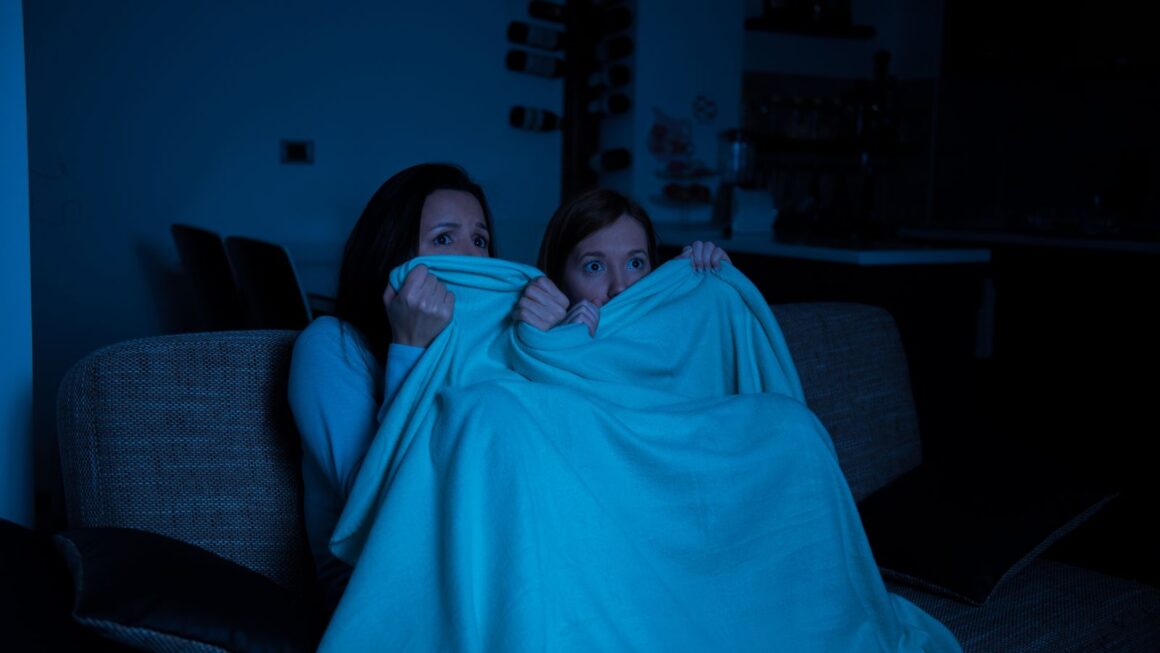
There is something specific about watching horror in a cinema that is worth naming: it is a communal experience of fear, and communal experiences of fear have deep roots in human social behaviour.
Gathering to face the frightening together — to be scared in company, to feel the relief of the jump scare’s resolution alongside other bodies, to emerge from the dark having shared something intense — is an ancient human practice. Horror cinema is a contemporary version of the campfire story, the ghost tale told to children, the ritual enactment of fear in a context where the danger is bounded and the community endures.
The laughter that follows a particularly well-executed horror scene in a cinema is not a sign that the film failed. It is a sign that it succeeded — that it produced genuine fear, and that the audience is releasing that fear together. It is one of the more purely social experiences that cinema provides, and one that streaming, for all its convenience, replicates imperfectly. Fear shared is fear halved. Horror in a room full of people is a different experience to horror alone on a sofa, and the difference is not trivial.
What Horror Knows That Other Genres Don’t
Horror knows that the world is not safe. It knows that things go wrong in ways that are not deserved and do not resolve neatly. It knows that the body is vulnerable, that institutions can fail, that the people you trust can be the source of the greatest harm. It knows that fear is not a character flaw but a reasonable response to genuine danger.
These are not comfortable things to know. They are true things — and there is value in art that tells the truth about uncomfortable realities, that gives form to the fears we carry but rarely name, that allows us to experience the worst things imaginable in the safest possible context.
Horror is not the lowest form of cinema. For the directors who take it seriously, it is among the most demanding — requiring precise control of atmosphere, timing, and audience psychology, while simultaneously engaging with the deepest anxieties of the culture that produces it. The best horror films are not films that happen to be scary. They are films that use fear as a tool for saying something true.
That is not a small thing. In a media landscape increasingly organised around comfort, reassurance, and the validation of existing beliefs, a genre that insists on showing us what we most want to look away from is not a guilty pleasure. It is a necessity.
About Author