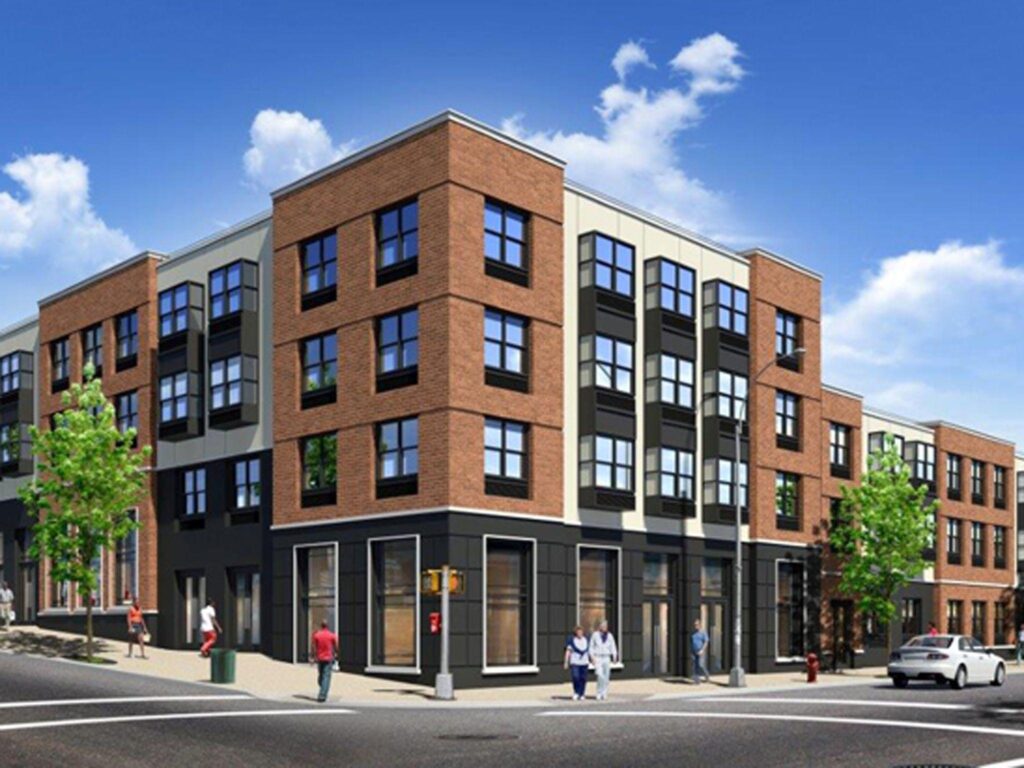
Walk through any major city, and you can pass dozens of businesses without realizing it. The unmarked metal door behind a parking lot turns out to be a kitchen running six delivery brands. The store on the corner with windows papered over isn’t closed — it’s full of pickers loading orders for a 10-minute grocery app. The third-floor apartment with the lockbox isn’t a residence anymore — it’s a hotel room operated by someone who has never lived there. These invisible businesses don’t show up on storefront maps. But they have already reshaped urban commerce, and the regulatory backlash is now catching up.
The Three Faces of the Invisible Economy
Each variant solves a slightly different problem, but the underlying logic is identical: separate the customer experience from the physical premises.
|
Type |
What It Replaces |
Typical Footprint |
Global Market Snapshot |
|
Ghost kitchen |
Restaurant dining room |
Industrial unit, 1,500–4,000 sq ft |
$97B in 2025, $204B forecast by 2030 |
|
Dark store |
Supermarket or convenience store |
2,000–8,000 sq ft, 2–3 km radius |
$32.7B in 2025, $176B forecast by 2030 |
|
Ghost hotel |
Licensed hotel rooms |
Converted apartments |
NYC: ~22,000 listings → ~3,200 after enforcement |
The category names vary by country and operator. Ghost kitchens are also called cloud kitchens or dark kitchens. Dark stores are sometimes labeled micro-fulfillment centers or quick-commerce hubs. Ghost hotels are usually phrased more bluntly — illegal short-term rentals.
Ghost Kitchens: How They Reshaped Food Delivery
The ghost kitchen idea moved from novelty to standard model between 2020 and 2024. Pure-play delivery-only kitchens in remote industrial areas mostly failed — too dependent on app commissions, too disconnected from any brand presence. What survived is the host-kitchen approach: existing restaurants running additional virtual brands from their own kitchens (Chili’s runs “It’s Just Wings”; Wingstop, Wendy’s, and TGI Fridays operate similar plays).
A few defining features explain why the model stuck:
- Startup capital is around $30,000 versus roughly $1 million for a traditional restaurant.
- Break-even in approximately six months versus up to five years for brick-and-mortar.
- Roughly 7,600 active ghost kitchens are operating across the U.S. as of 2026.
- Profit margins of 10–30% on the highest-performing operations.
- North America at 31.7% of the global market share; Asia-Pacific is close behind at 28.6%.
Dark Stores: The Backbone of Quick Commerce
The dark-store sector has grown faster than any of the others. The global market jumped from $23 billion in 2024 to roughly $46 billion in 2026, with forecasts pointing to $176 billion by 2030. India is the most aggressive market — Blinkit operates around 2,100 stores, Zepto 1,150, Swiggy Instamart 1,136, with Flipkart targeting 1,500+ by year-end 2026. More than 6,000 dark stores now operate across India, processing up to 1,800 orders per day from inventories of roughly 17,000 SKUs in spaces around 4,000 square feet.
The Western model has developed differently. Walmart’s dark-store strategy contributed to a 21% rise in U.S. e-commerce sales in Q1 2025 and a 91% increase in sub-three-hour deliveries, with 28% lower per-order labor costs. Street-level changes are visible: convenience stores with windows papered over, banks of motorcycles parked outside, zero foot traffic.
Ghost Hotels and Why Cities Started Pushing Back
Of the three categories, short-term rentals provoked the most aggressive regulatory response. New York City’s Local Law 18, fully enforced from September 2023, cut Airbnb listings from around 22,000 to roughly 3,200 — over 90%. Of about 3,250 host applications, only 257 were approved by late August 2023. The law required host registration, primary-residence verification, and host presence during stays under 30 days.
The justification was housing affordability. Researchers had documented “ghost neighborhoods” in cities like New Orleans and Lisbon, where short-term rentals had hollowed out residential life. Boston, Vienna, Dublin, Athens, and Barcelona have followed with similar restrictions; Spain levied a multi-million-dollar fine on Airbnb in December 2025 for unregistered listings. Critics note the laws haven’t moved rents downward — NYC median asking rent rose 2.1% in the year after enforcement, and hotel rates rose 6% — but the policy direction is set.
What This Means for Consumers
The shift from visible to invisible businesses has split commerce into two tiers: licensed digital operators that publish their terms transparently, and informal operations that hide both the location and the rules. Online entertainment has gone through the same sorting. Sites like FS.casino sit in the licensed-operator tier, with bonus terms, deposit limits, and responsible-gambling tools published openly rather than buried — the same disclosure-first standard food-delivery apps and dark-store retailers are increasingly being held to. The principle is consistent: the sectors maturing fastest are the ones where the rules are scannable, and the operator is named.
What All Three Have in Common
These businesses optimize for unit economics, speed, and software-defined logistics rather than foot traffic, signage, or local presence. They scale fast, squeeze cost out of the supply chain, and leave a smaller physical footprint per dollar of revenue. They also externalize costs traditional businesses absorb — driver labor, residential disruption, and the loss of housing stock to tourism. The next phase isn’t whether the invisible economy keeps growing; the data shows it is. The question is whether cities can build regulatory frameworks fast enough before the storefronts that used to define neighborhoods become entirely ornamental.
About Author